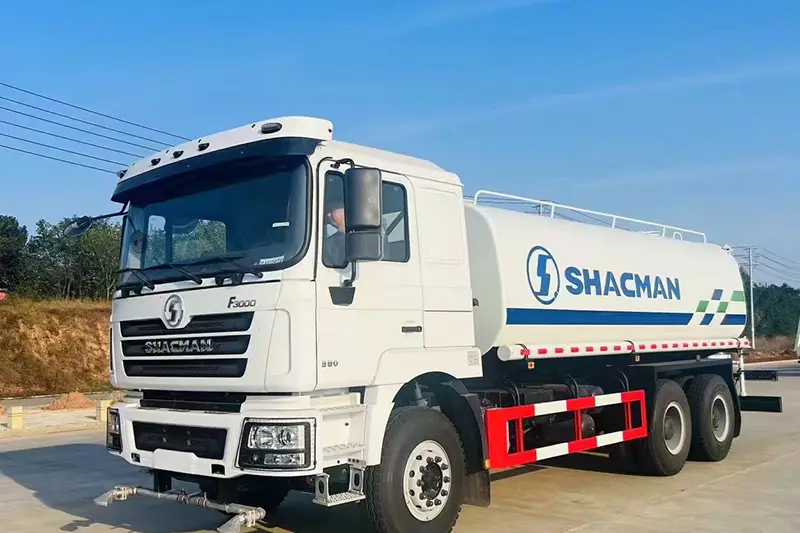

How Does Real‑Time Tire Pressure Monitoring Improve Tanker Truck Safety?
A tanker truck carrying hazardous liquids – fuel, chemicals, or liquefied gas – is a moving pressurized vessel. One tire failure at highway speed can trigger a rollover, a fire, or a catastrophic spill. Unlike dry vans, a tanker truck’s high center of gravity and liquid surge make it exceptionally vulnerable to sudden tire deflation. Real‑time tire pressure monitoring systems (TPMS) have evolved from a convenience feature to a non‑negotiable safety tool. This article explains how modern TPMS prevents blowouts, reduces rollover risk, and cuts operating costs – and why forward‑thinking manufacturers like Hubei Runli Special Automobile Co., Ltd. integrate these systems into their hazardous material tankers.
The Unique Dangers of Tanker Truck Tire Failures
A standard truck losing a tire may pull over. A tanker truck losing a tire faces two compounding threats:
- Liquid surge – When a tire deflates, the tanker tilts. The liquid inside shifts violently to the low side, amplifying the roll moment. Even a 20% pressure drop in one dual tire can create a noticeable lean.
- Heat generation – Underinflated tires flex more, overheating rapidly. For a fully loaded tanker (up to 44 tonnes), a tire running at 50% pressure can reach 120°C within 30 minutes, leading to a tread separation or blowout.
- Delayed detection – Drivers cannot feel slow deflation. By the time a tire is visibly low or smoking, it is often too late.
How Real‑Time TPMS Works on a Tanker Truck
A typical commercial TPMS for a tanker truck includes:
- External or internal sensors mounted on each wheel (steer, drive, and trailer axles – up to 22 sensors for a 3‑axle tractor + 3‑axle tanker).
- Bluetooth or RF transmitters sending data every 5 seconds to a cabin display.
- Programmable thresholds – for example, pressure below 80% of nominal triggers a visual/audible alarm. Temperature above 85°C also triggers a warning.
Advanced systems add:
- Automatic trailer identification – when swapping tanker trailers, the monitor recognises the new set.
- GPS integration – fleet managers see live tire data alongside vehicle location.
- Predictive analytics – tracking pressure degradation over time to flag slow leaks before they become critical.
For a tanker truck carrying Class 3 flammable liquids, a TPMS becomes part of the ADR (European Agreement) or DOT hazardous materials compliance framework.
Key Pain Points Solved for Tanker Operators
| Issue | Without TPMS | With Real‑Time TPMS |
|---|---|---|
| Slow puncture on dual tire | Driver unaware; tire disintegrates, damaging brake lines | Alarm at 10% pressure drop; driver stops safely |
| Ambient temperature variation | Winter pressure drops 1‑2 psi per 10°F – all tires underinflated | Display shows real psi; driver adjusts before departure |
| Trailer tire neglect | Trailer tires often ignored during walk‑around | Sensors report regardless of cargo area |
| Roadside blowout | Sudden loss of control, rollover risk | Early warning: pressure trend, driver reduces speed |
| Fuel cost | Underinflated tires increase rolling resistance → 3‑5% higher fuel consumption | Optimal pressure maintained → fuel savings |
Parameter Table – Recommended TPMS Specifications for Tanker Trucks
| Parameter | Recommended Value for Tanker Truck | Why It Matters |
|---|---|---|
| Pressure range | 80 – 150 psi (or 5.5 – 10.5 bar) | Covers steer, drive, and high‑pressure trailer tyres |
| Temperature range | -40°C to +125°C | Withstands brake heat and extreme climates |
| Sampling interval | ≤ 10 seconds | Fast enough to catch rapid deflation |
| Alarm thresholds | Adjustable: –20% pressure, +15% temperature | Customisable for different loads (e.g., fuel vs. acid) |
| Sensor battery life | 5 – 7 years (replaceable) | Minimises maintenance downtime |
| Communication range | ≥ 30 meters from cab to last trailer axle | Reliable for long tanker combinations (up to 18m) |
| Display type | In‑cab colour screen with numeric psi and °C | Clear, glance‑readable at night |
| Data logging | Last 30 days storage | For fleet analysis and accident investigation |
| Compliance | Meets FMVSS 138 (US) or UN ECE R141 (EU) | Legal requirement in many jurisdictions |
Real‑World Impact – Reducing Rollover and Blowout Accidents
Data from the US Federal Motor Carrier Safety Administration (FMCSA) shows that tire‑related issues contribute to approximately 15% of all truck rollovers. For tanker truckconfigurations, that percentage rises because of liquid surge. After the widespread adoption of TPMS among major fuel carriers, one fleet reported:
- 78% reduction in tire‑caused roadside breakdowns
- 52% drop in blowout incidents
- 5% improvement in fuel economy (due to consistent pressure)
For a hazardous material carrier, even a single prevented accident saves hundreds of thousands in cleanup costs, liability, and regulatory fines.
Why Choose a Manufacturer That Integrates TPMS as Standard
Buying a tanker truck and adding aftermarket TPMS often leads to compatibility issues: sensor brackets that don’t fit, wiring conflicts with ABS, and displays that clutter the dashboard. A better approach is to source from a manufacturer that engineers TPMS into the vehicle from the start.
Hubei Runli Special Automobile Co., Ltd. – founded in 2009 and listed as a special vehicle manufacturer by China’s Ministry of Industry and Information Technology – produces tankers under the “Runzhixing” brand (vehicle model code SCS). The company is also a licensed manufacturer of hazardous chemical packaging and containers, and an exporter of special vehicles.
Runli integrates real‑time TPMS as part of its safety package for fuel, chemical, and LPG tankers. Their vehicles come with pre‑wired sensor mounts, a dedicated display that does not interfere with other electronics, and calibration for the specific axle loads of a tanker truck. Additionally, the company holds ISO 9001 and national high‑tech enterprise status, ensuring that every vehicle meets GB7258 (Chinese safety standard) and international export requirements.
Why procurement managers choose Runli:
- Factory‑direct TPMS integration – no aftermarket retrofitting costs.
- Certified manufacturing for hazardous cargo – peace of mind on compliance.
- 50 million yuan registered capital and state‑listed status – financial stability and long‑term support.
- Customisable alarm settings for different cargoes (e.g., lower threshold for corrosive liquids).
One‑Click Checklist – Sourcing a TPMS‑Equipped Tanker Truck
Before finalising your order, ask these questions:
- Is TPMS standard or optional? Confirm model code includes it.
- Are the sensors external or internal? (Internal is more theft‑proof.)
- Can the system differentiate between tractor and trailer tires on the same display?
- Does the alarm include a mute button (to avoid driver distraction)?
- Are replacement sensors available for at least 5 years?
Hubei Runli Special Automobile Co., Ltd. answers all these positively for their SCS series tankers.
A Small System with Massive Safety Returns
Real‑time tire pressure monitoring is not a luxury. For a tanker truck carrying hazardous goods, it is a layer of protection between a routine journey and a disaster. Modern TPMS is reliable, affordable, and increasingly mandated by regulations. For fleet owners and logistics managers, specifying TPMS at the point of vehicle purchase is simpler, cheaper, and more effective than adding it later.
When tendering for new tanker truck units, include TPMS as a mandatory technical requirement. Use Table 2 above to define the specifications. And partner with a manufacturer – like Hubei Runli Special Automobile Co., Ltd. – that already integrates these systems into its certified, export‑ready tankers.
Related News
- What Exactly Is OTTC Certification for Central Asia Vehicle Imports?
- How Can 3Ton Refrigerated Truck with Carrier Reefer Unit Cold Chain Transport Improve Logistics Efficiency?
- How to precisely solve the problems of enterprises' foreign trade exports?
- Looking for the original manufacturer of the crane-equipped emergency rescue vehicle? Isuzu's vehicle-mounted crane emergency rescue vehicle is directly supplied overseas
- The best selling Compactor Garbage Truck for wholesale buyers
- How Can Refrigerated Trucks Transform Your Cold Chain Logistics?
Leave me a message